Monday, July 23, 2012

What To Wear When You Ride

Proper gear is essential to safe riding. Wearing the right clothing always makes the sport more enjoyable and more comfortable, too.

HELMET

Around the block or around the world, it makes sense to leave home with a helmet on your head. IT’S ONE OF THE BEST ITEMS OF PROTECTION YOU CAN USE.

Helmets come in all sizes, from extra small (XS) to extra large (XL). There are also helmets for children. When you buy a helmet, make sure it fits properly. Try it on; it should be comfortable to wear, neither too tight nor too loose. Remember, it is going to spend a lot of time on your head.

A full-face helmet gives the most protection since it covers all of the head and face.

Always fasten the helmet strap. If the helmet is not secured, it is doing about as much good as if it were on the shelf at home.

Did you know that all adult-sized motorcycle helmets now sold in the United States must have a sticker indicating DOT (Department of Transportation) compliance, which means that the helmet meets certain basic impact standards? Don’t buy a helmet without one; it may not meet standards. Helmets vary greatly in price and style. Buy one that suits you. Wear it. Fasten it every time you throw a leg over the motorcycle.

A good helmet makes motorcycling a lot more pleasurable because it cuts down on the wind noise and greatly reduces rider fatigue. The days of heavy or cumbersome helmets are gone; they’re now made of light new materials with terrific designs and colors to choose from.

If you do drop your helmet onto a hard surface, or it receives a heavy blow, it is probably time to buy a new one. A motorcycle helmet is designed to absorb the impact of a blow, and a helmet should only do that once. If in doubt, get a new one.

EYE PROTECTION

Riding with bare eyeballs is a gamble. Your eyes are precious, and it does not take much to injure one.

A windshield on a motorcycle is not eye protection; a bit of sand or tiny piece of glass can whip in behind it and get in your eye.

Proper eye protection means an approved shield on your helmet, a pair of goggles, or shatterproof glasses. Settling for less just isn’t worth the risk.

Make sure your eye protection is clean and unscratched. If you use a tinted lens or shield for riding in the bright sunlight, take a clear one along as well, in case you are riding after dark.

JACKET

Motorcycle jackets are made in many sturdy materials: denim, nylon in its various guises, corduroy, and leather. The hide of a cow, or any other commonly used leather, offers you the most protection when it comes to abrasion. You can buy leather jackets with zippered vents, which are comfortable to wear even in hot weather as they allow a breeze to flow through.

PANTS

These should be made of a thick material, such as leather. They resist abrasion and provide protection from the elements. A pair of loose, light cotton pants that flap in the wind is not very good riding gear. A number of companies sell leather riding pants, and you can get pants and jacket combinations that zip together.

Some riders choose jackets and pants with rigid "body armor" inserts in critical areas for additional protection.

GLOVES

Always wear gloves. Even on a hot day. The car in front of you may throw up a stone that hits your fingers. Ouch! Also, bare hands cannot withstand abrasion in the event of a fall.

BOOTS

Over-the-ankle boots, please. Preferably made of strong leather. Your ankles are very complicated; protect them.

A boot with a slippery sole could cause embarrassment when you put your foot down at a greasy gas station. Rubber soles, with a good tread design, offer better gripping possibilities.

RAINGEAR

It rains everywhere in this country, some places more than others. Inevitably you will be caught out in the rain. Why not have a good motorcycle rainsuit along, with rain-covers for boots and gloves as well? It’s a lot more fun riding in the rain when you’re dry.

HEARING PROTECTION

Long-term exposure to engine and wind noise can cause permanent hearing damage, even if you wear a full-face helmet. Whether you choose disposable foam plugs or reusable custom-molded devices, proper protection reduces noise, while allowing you to hear important sounds like car horns. Make sure you follow your state’s laws when using hearing protection.

HIGH-VISIBILITY GEAR

The better people see you, the less likely they are to run into you. Brightly colored clothing is preferable to drab, dark clothing.

You can buy special vests which are designed to make it easier for others to see you. Some military bases feel strongly about this feature and require all motorcyclists to wear them.

For nighttime, you can buy clothing that reflects light, and put reflective strips on your helmet and the backs of your boots. Every little bit helps.

____________________
source: Motorcycle Safety Foundation

Wednesday, July 18, 2012

Motorcycle Tour of the Smoky Mountain for Women

Here’s one for you ladies. Freedom In The Mountains – Guided Motorcycle Tours is hosting 2 River Pilot Tours – Women Motorcycle Tours (WMT) in the Smoky Mountains. River Pilot Tours is one of the leading Tour Planning companies in the world. River Pilot Tours lets you enjoy the tour by taking care of the route planning, accommodations plus they provide a tour guide and support vehicle to carry all of your items.

Freedom In The Mountains will be taking the Women Motorcycle Tour (WMT) on a 7 day 950 mile trek through the beautiful Smoky Mountains. You’ll get to see waterfalls, mountain vistas, hot springs and more as the tour winds along these famous routes: Cherohala Highway, Tail Of The Dragon, Chattahoochee National Forest, Guntersville Lake, Dixie Highway, Great Smokey Mountain Expressway, Blue Ridge Parkway, Richard Russell Scenic Highway.

Along the way you’ll be stopping at places like the Wildflower Cafe and Country Store, Ruby Falls, Hot Springs Spa, Biltmore Estate, Museum Of The Cherokee Indian and Consolidated Gold Mine. The best part is all you have to do is book the tour and show up. River Pilot Tours and Freedom In The Mountains has taken care of all the details. Plus a donation will be made to the Make A Wish Foundation on behalf of the group.

The dates for the Women Motorcycle Tour are August 18, 2012 – August 24, 2012 and/or October 06, 2012 – October 12, 2012. The ride is approximately 950 miles with daily rides about 150 miles with the longest being 241 miles. Riding conditions will be sweeping mountain curves with moderate riding difficulty. You must have a current motorcycle license from your home state or country. The price is: $2,649/person, double occupancy; if you bring a passenger its $599 more; and if you want to room by yourself add $325. For more details about the Women Motorcycle Tours in the Smoky Mountains go to: freedominthemountains.com , or www.riverspilot.com/women-motorcycle-tour-151 . Be sure to tell them you found out about them from IronWorks Magazine.


____________________
source: Iron Works (Kanish, 6/26)

Monday, July 9, 2012

Tips for motorcycle passengers

Texas Motorcycle Accident Attorney - Tips for motorcycle passengers
Summer is the time for those longer motorcycle rides, including rallies such as Sturgis and the already past Republic of Texas Biker Rally. So it goes that you are more likely to take along a passenger on your motorcycle to keep company. Here are some riding tips for motorcycle passengers.

The rider should suggest appropriate clothes for the passenger to wear. Like the rider, the passenger must wear protective clothing in case of an accident or an unlikely spill. Leather jackets and pants are highly suggested, but if the passenger does not or cannot get a hold of a pair of leather pants, any durable pair will do the trick. For the jacket it can be anything durable as long as it's abrasion resistant.

The passenger should wear shoes that will protect their feet, but boots are highly recommended over regular shoes. Wearing a helmet is a must for safety reasons, it is preferred to wear a helmet with a face shield, and if the helmet doesn't have one, then one must wear goggles or glasses to protect the rider's eyes. Being comfortable is important, especially with the unpredictable Texas weather, but the usual comfortable clothes are loose and billowy, and they can become stuck in the motorcycle's rear wheel, drive chain, or any other moving part, so please refrain from using extremely loose clothing.

Before mounting the motorcycle, make sure the passenger knows how to get on and get off. The passenger should know where the foot pegs are located, and if they are down or not. It is generally custom to mount and dismount from the left. While doing this, one should be aware of the location of the exhaust pipes, and try not to touch them with your legs since they can be hot and can cause minor burns. By just lifting your left leg one can just gently slide and mount the motorcycle, without forgetting to set your feet on the pegs. Before getting off a motorcycle, the passenger should wait for the rider to say it is okay to get off, since an unexpected weight change can make the motorcycle fall.

While the motorcycle is in motion, it is important the rider keep their feet on the pegs and cinching down any laces on their footwear. Doing so lowers the possibility from their feet getting caught on the rear wheel, drive chain, or touching the exhaust pipe, which, again, is extremely hot. Passengers should never try to help the rider hold up the bike.

For safety reasons the passenger should always hold on to the rider's hips, since holding their hips keeps the weight on the bike centered, and the bike's movements smooth. If the passenger moves around, the movement can overthrow the balance of the motorcycle and can lead to an accident. Motorcycles tend to do turns by leaning to the side that they are turning into, so don't freak out! Just position your body to where the motorcycle is leaning. When the motorcycle comes to any stops, the passenger tends to slide into the rider, in order to prevent this the passenger should brace their weight against the foot pegs and use their thigh muscles.

By following these tips, both the rider and the passenger can be safe. When both passengers and riders are comfortable and safe, they can simply relax and enjoy the motorcycle ride, and then while on a lengthy ride the only worry is where you're going to stop next and get something to eat!

Friday, July 6, 2012

Custom Motorcycle Paint Shops in North Texas

There are many shops in North Texas that can do custom paint jobs for motorcycles, but before you decide where you want to get it done, first you have to do some research. You want to find out whether the place of interest has a good reputation, and if other riders have gotten good work done by the artists or not. If you end up undecided on where to go, not to worry Texas Rider News has 6 great places listed for you.

Other Side Customs specializes in touring motorcycles, but also do  custom paint jobs for helmets and cars.  Located on 7111 John Carpenter Fwy.  Their price range depends on the scope of the artwork, but it generally ranges from $1,000 to $2,5000.  For more information call (214)-905-3233 or visit their website www.othersidecustoms.net.

TEXEFX custom paint shop specializes on motorcycles, helmets, and cars, but pin-striping is their forte. They are located in 6200 Crow Wright Rd Sanger, Texas 76266 just north of Dallas/Fort Worth. For more information on TEXEFX call (940)-482-9969 or visit their website www.texefx.com

Dallas Air Brush specializes on both motorcycles and cars, and currently have a deal for $100 off any motorcycle paint job (tank, and fenders, 3-pieces, or any paint job of $1,000 or more).  It is located in 2415 midway Rd suite  Plano, Texas 75025.  For more information or an estimate call (214)-529-4410 or visit their website www.dallasairbrush.com.

With eleven locations all over the Metroplex, Chronic Customs works with cars, motorcycles, and trucks.  Located mainly in Dallas, Arlington, and Grapevine, they offer a paint job you will love.   Their price range for a two tone goes for $1,100 to $1,400.For more information call (817)-371-4085 or visit their website www.chroniccustoms.com.

Sik offers high quality paint jobs that are magazine ready, and award winning airbrush work.  They specialize on motorcycles, cars, and helmets. Located on Beltline Rd, Mesquite,Texas 75149. For more information call (214)-995-4664 or visit their website www.sikautosports.com

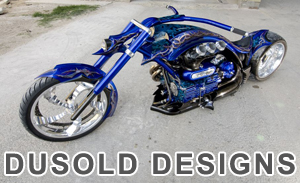
DuSold Designs specializes in high quality air brushing and body work for cars, motorcycles, trucks, helmets, and guitars. They also offer other services such as:  pin stripping, metal fabrication, L.E.D.’s, complete cars and motorcycle builds, custom mechanical services, and paint repairs.  Located in 1491 N.Kealy suite 35 Lewisville Texas, 75057  For more information call (972)-221-1455 or visit their website www.dusolddesigns.com.

Monday, July 2, 2012

Four Great Motorcycle Rides in Texas


One does not have to ride out of state to experience breath-taking landscapes like those in the movies.  Texas is filled with so many varied, vast, and beautiful places, but when motorcyclists want to escape the Metroplex, they tend to go westward.
 
If you are heading west, one place to stop worth considering is Fort Richardson State Park off road 61, in the panhandle plains region.  While here, soak up some history and nature at the same time.  Fort Richardson was built in 1867 to provide protection to farmers, ranchers, and prospectors who headed to the gold fields and stages on the Butterfield Overland Mail Route.  Every now and then, they host live reenactments, barbecue cook-offs, fishing tournaments, living history presentations and motorcycle runs.  Jacksboro is just outside the park gate, and City Drug, a famous pharmacy store, has one of the last few old-time soda fountains.  It's less than an hour from Fort Worth.  Fort Richardson State Park can be a great place to check out, even if it is just for a short stop.

Another locale that makes for a sweet ride is the Bastrop Park Road 1.  It is filled with winds and snakes, through a beautiful area that blends a bit of East Texas with the famous Hill Country.  The route features a forest that forms a canopy made out of old pines and oaks that makes for an interesting corridor ride.  There are also camping and fishing sites, if you get the notion to stop at and relax.  This non-stop-curved route has a smooth road with a few cattle guards, and in going the opposite direction gives riders a completely different type of view. It's sometimes referred to as "The Copper Head Snake Road" because of the constant winding.  A great place to stop for some food is The Roadhouse, which is located at the entrance of the Bastrop State Park.  The Roadhouse is one of the few best hamburger joints in Texas.

If you're interested in a more condensed, smaller route to ride, check out Mission Tejas State Park.  Mission Tejas is a quiet relaxing place that is tucked deep within dense tall pines.  While on this ride, a point of interest is a commemorative representation of the 1690 Mission San Francisco de los Tejas.  Located 21 miles northeast of Crockett, and 12 miles west of Alto on State Highway 21, Mission Tejas carries you back through several important periods of Texas history along one of the oldest roadways in America.

Just southwest of Claude, Texas you'll find the breath-taking Paloduro Canyon Loop.  This loop takes you in and out of Paloduro in the Texas panhandle, and it is great for seeing canyon formations and desert scenery.  Even though the loop is mostly straight with a few sweeping turns, it does have harder twisties mixed in the canyon areas.  There are no real major attractions to speak of on this route, but the view alone is worth it. A rider can just sit back, hit the accelerator, and enjoy a breath-taking sunset.

Wednesday, June 20, 2012

Motorcycle Enthusiast Builds His Dream Chopper Out of Wood. And It Runs!


Istvan Puskas, a motorcycle enthusiast from Hungary took the term “chopper” litterally and actually spent the last two years chopping his dream ride from black locust wood.

In the past, we’ve featured a few other unique wooden vehicles, like the bicycles of Slawomir Weremkowicz, or the VW Betle built by Momir Bojic, and even the popsicle stick bike made by Sun Chao, but this is the first functional chopper we’ve ever seen. Istvan Puskas has spent the last two years building a -one-of-a-kind chopper almost entirely out of weather-resistant black locust wood. It’s not clear whether the agricultural machine expert from Tiszaros, 161 kilometers east of Budapest, couldn’t afford to buy himself an ordinary chopper, or if he just wanted to create something that would stand out weherever he went, but his wooden masterpiece certainly got a lot of attention when it was recently unveiled.


Wood isn’t the only unusual material used to create this special chopper. Instead of chromed steel, the handlebars and exhaust pipes are made from cow’s horns, and the amateur bike-maker used deer antlers as decorations. But what’s most surprising about Istvan Puskas’s chopper is that it actually works. He used the engine of a small Fiat built in Poland under license from the Italian car maker, fueled with petrol from a small wooden barrel that serves as a gas tank. But considering, the chopper doesn’t look like it has any suspensions, I don’t think it’s the right vehicle for long outings. Still, the level of craftsmanship that went into the build is nothing short of impressive.


____________________
source: Oddity Central (Spooky, 6/15)
photos: Laszlo Balogh (Reuters)

Monday, June 11, 2012

Biker groups lobbying against stricter helmet enforcement


WASHINGTON - In a highly touted safety achievement, deaths on the nation's roads and highways have fallen sharply in recent years, to the lowest total in more than half a century. But motorcyclists have missed out on that dramatic improvement, and the news for them has been increasingly grim.

So it might be no surprise that biker groups are upset with Washington. The twist is what they are asking lawmakers and regulators to do: Back away from promoting or enforcing requirements for safe helmets, the most effective way known to save bikers' lives.

Fatalities from motorcycle crashes have more than doubled since the mid-1990s. The latest figures show these accidents taking about 4,500 lives a year, or one in seven U.S. traffic deaths.

Yet if the biker groups' lobbyists and congressional allies have their way, the nation's chief traffic cop - the National Highway Traffic Safety Administration, or NHTSA - will be thwarted in its efforts to reduce the body count. The agency would be blocked from providing any more grants to states to conduct highway stops of motorcyclists to check for safety violations such as wearing helmets that don't meet federal standards.

Beyond that, the rider groups are seeking to preserve what is essentially a gag rule that since 1998 has prevented NHTSA from advocating safety measures at the state and local levels, including promoting lifesaving helmet laws. And the bikers' lobbyists, backed by grassroots activists and an organization whose members include a "Who's Who" of motorcycle manufacturers, already have derailed a measure lawmakers envisioned to reinstate financial penalties for states lacking helmet laws.

Those moves by bikers' groups are partly intended to maintain their clout in state legislatures, which have kept rolling back motorcycle helmet regulations for three decades. With Michigan's repeal in April of its nearly 50-year-old helmet requirement, only 19 states, including New Jersey, have helmet laws covering all riders, according to the Insurance Institute for Highway Safety. (Pennsylvania's law covers riders 20 and younger.) In the late 1970s, by contrast, 47 states had such requirements.

"This is . . . an interesting and dangerous road they are going down," said Jackie Gillan, president of the Washington-based nonprofit Advocates for Highway and Auto Safety. "They are so emboldened now, not only do they try to repeal laws and stop them from being enacted, they try to stop the hands of law enforcement, saying you cannot use grant money to have motorcycle checkpoints. Can you imagine if they said the same thing about sobriety checkpoints?"

Biker groups, contending that helmet laws curtail personal freedom, say the federal government should instead emphasize rider training to prevent crashes from happening in the first place.

But it is far from clear that training does anything to reduce crashes or deaths. A 2007 Indiana study, for instance, found that riders who completed a basic training course were 44 percent more likely to be involved in an accident than untrained riders. Researchers speculated that the courses gave riders unwarranted confidence, and that they ended up taking more risks.

Even if training pays off, public health advocates argue that relying on it exclusively would be equivalent to, in the automotive world, exempting people who take a driver's education course from requirements to use seat belts or to put children in car seats.

Mandatory helmet laws are widely considered the closest thing to a silver bullet that regulators have to thwart deadly accidents. NHTSA estimates that helmets saved 1,483 lives in 2009, and that an additional 732 deaths could have been avoided if all riders had worn them. The social costs of the carnage are also huge: A 2008 agency estimate concluded that $1.3 billion in medical bills and lost productivity would have been saved if all bikers had worn helmets.

The paradox between what biker groups are lobbying for vs. what most safety experts say really works riles regulators and other public health advocates.

"You cannot be in this battle and not be frustrated by this senselessness," said Michael Dabbs, president of the Brain Injury Association of Michigan.

That motorcyclists have evaded the kind of regulation that has made seat belts and car seats standard equipment in other motor vehicles shows the influence of a vocal minority of riders whose libertarian message seems to resonate more than ever with lawmakers inside and outside the Beltway. And their efforts receive support from the leading motorcycle manufacturers. Manufacturers generally endorse the use of helmets, but, loath to offend their customers, they are also an important dues-paying membership bloc in the American Motorcyclist Association, which is an ardent opponent of helmet laws.

The rider lobby's powerful friends include Rep. James Sensenbrenner (R., Wis.), whose state is home to Milwaukee-based Harley-Davidson Inc. He has led efforts in the House to block NHTSA from promoting state and local safety measures and using federal funds for motorcycle checkpoints.

Motorcycle groups have become better organized and funded, roaring to life with Washington lobbyists and thousands of grassroots volunteers to fight helmet requirements on the federal and state levels.

The American Motorcyclist Association - whose corporate members include Harley-Davidson and North American divisions of Yamaha, Kawasaki, Honda, and Suzuki - has spent $3.8 million lobbying Congress on helmet laws and other issues over the last decade, while doling out more than $200,000 in campaign contributions to members, according to OpenSecrets.org, a database run by the nonprofit Center for Responsive Politics. The Motorcycle Riders Foundation spent $2.1 million in lobbying during the same period.

As more riders have gotten on the road and the number of states with mandatory helmet laws has declined, biker deaths have soared. The death toll climbed from 2,116 in 1997 to 4,502 in 2010, the most recent year for which figures are available.

The victims last year included Caroline Found, 17, of Iowa City, Iowa, who died after she lost control of her moped and struck a tree. They also included Philip Contos, 55, who was killed while participating in a rally to protest the state's mandatory helmet law. Police say Contos, who resided near Syracuse, N.Y., would have survived had he been obeying the law.

Contos' death attracted widespread media attention, although friends say he would have been repulsed by the idea that he had become a poster boy for helmet laws.

Four teenage friends of Found, motivated by her death, launched a campaign to persuade the Iowa legislature to enact a helmet law. (Along with Illinois and New Hampshire, Iowa allows riders of all ages to shun helmets.) Their bid fell short.

"It is getting to the point where we're going to have to bubble-wrap everyone just to protect them from everything," a state legislator told the young activists, explaining his opposition to a ban. "I think there's got to be some common sense here."

Helmet advocates say the public ends up getting ripped off when it has to pick up the tab for health costs associated with catastrophic accidents.

"If you don't wear a helmet, and you sustain a moderate to severe injury that doesn't kill you, you are going to be a drain on society for the rest of your life," said Thomas J. Esposito, chief of the Division of Trauma, Surgical Critical Care and Burns at Loyola University Medical Center in Chicago.

NHTSA now faces opposition to motorcycle checkpoints. The agency in 2010 earmarked $350,000 to help state police set up stops to check motorcyclists for safety violations. One intent is to crack down on so-called novelty helmets, which do not meet federal standards but account for an estimated one in five of the helmets riders wear. The helmets have become popular because they are lightweight and come in various styles - and because they can keep police away in states that mandate helmet use.

Motorcycle activists again found a sympathetic ear in Sensenbrenner, who introduced legislation to end federal funding of motorcycle-only roadside checkpoints. The anti-checkpoint measure may be considered by a House-Senate conference committee currently working on a long-term surface transportation bill.

"These checkpoints are not an effective use of taxpayer money," Sensenbrenner said, in a prepared statement in response to questions. "Motorcycle-only checkpoints force law enforcement officials to play 'nanny state' to all riders rather than focusing on those who are endangering themselves and others on the road, and do not address the factors that contribute to motorcycle crashes."

Biker groups raise similar points.

"The federal government says all day long: 'You guys are a huge problem. You are killing yourselves out there. You need to start wearing helmets.' But then they do not want to put resources" toward training and accident prevention, said Jeff Hennie, a Washington-based lobbyist for the Motorcycle Riders Foundation.

Doctors such as Esposito who provide care for the people hurt in those crashes, though, are sometimes mystified about why riders don't take it upon themselves to wear safe helmets for their own protection.

Asked whether he often thinks about how a patient with a head injury could have avoided his plight simply by wearing a helmet, Esposito replied: "All the time."

____________________
source: The Inquirer (Schmitt, 6/10)